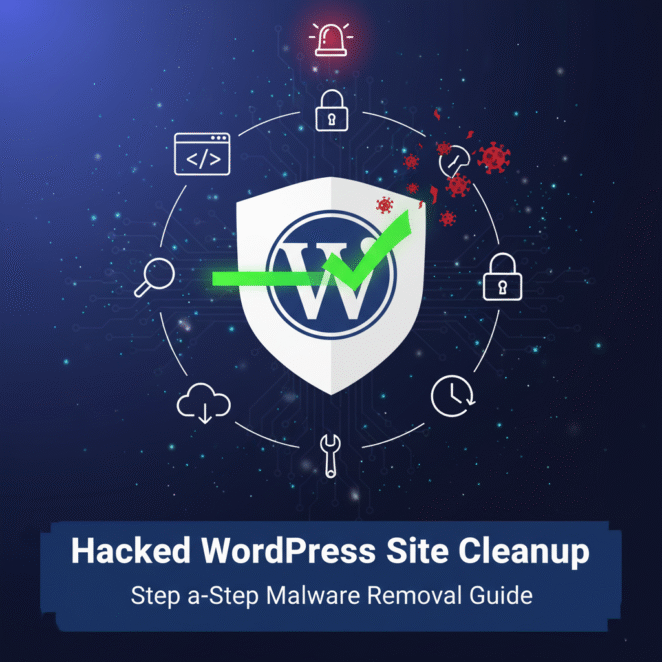
In the competitive digital world, a successful website is a constant target for malicious attacks. If you’ve seen a spam warning, a sudden drop in traffic, or been completely locked out, chances are your WordPress site has been compromised. The moment you realize your site is hacked, immediate, calm, and systematic action is necessary to minimize damage.
Dealing with a security breach can be overwhelming, especially when faced with technical jargon and the fear of losing data. This comprehensive guide provides you with a definitive, step-by-step roadmap to effectively clean hacked WordPress site, remove every trace of malware, and restore your website’s integrity and performance.
The Immediate Response: What to Do First When Hacked?
- Your reaction in the first few hours determines the extent of the damage. Don’t touch anything yet. Follow these critical steps:
- Change Passwords Immediately: Change passwords for your WordPress Admin, database (MySQL), FTP/SFTP, and hosting control panel (cPanel/Plesk). Use strong, unique passwords.
- Contact Your Host: Inform your web hosting provider. They can often provide details about the attack, scan the server environment, or restore a very recent clean backup (if available).
Take Your Site Offline (Optional but Recommended): To prevent further spread of malware or damage to visitor machines, use your hosting panel to display a static “Maintenance Mode” page instead of the compromised site.
Step 1: Detect and Isolate the Infection Source
To effectively clean hacked WordPress site, you must first understand the infection.
A. Run a Full Security Scan
Use reputable online scanners (like Sucuri SiteCheck or Wordfence) to get an external view of the hack. For a deeper analysis, install a trusted security plugin (if possible) to scan all core files, themes, and plugins for malicious code signatures.
B. Check Core Files for Integrity
A classic sign of a hack is when WordPress core files are modified.
Compare with Fresh Install: Download a fresh version of WordPress from wordpress.org. Compare the files (wp-config.php being a major target) line-by-line with your current installation.
Look for Suspicious Files: Check directories like /wp-content/uploads/ for PHP files. PHP files should never be in the uploads folder.
C. Review User Accounts and Settings
Hackers often create a hidden backdoor user.
Check the Users section in your admin panel for any unknown administrator accounts.
Verify your General Settings to ensure the site title, tagline, and email address haven’t been changed to a spam or phishing link.
Step 2: The Deep Malware Removal Process
This is where the real WordPress malware removal happens. You need to be thorough and systematic.
A. Clean the Core and Content Folders
Backup the Hacked Site: Before making any changes, download a complete copy (files and database) of the hacked site. This is a forensic backup.
Delete Everything: Delete all core WordPress files (everything except the wp-content folder and the wp-config.php file) from your server.
Upload Fresh Core: Upload a fresh, clean version of WordPress from a reliable source.
Clean wp-content:
- Delete all themes and plugins that are not actively used.
- Update all active themes and plugins to their latest, clean versions.
- Carefully check the /uploads/ directory for any non-image files (like .php or .js). Delete any suspicious files.
B. Sanitize the Database
The database is often overlooked but can hold persistent malware code (like spam links in posts or malicious admin entries).
- Use phpMyAdmin to look for large, unusual tables.
- Scan tables like wp_options and wp_users for suspicious entries, especially in the siteurl or home fields.
- Look for injected code in post tables (wp_posts).
C. Examine the wp-config.php File
This file holds your database credentials and is a prime target for backdoors.
- Look for strange lines of code at the very top or bottom of the file.
- Ensure the database credentials are correct and no extra lines have been added.
Step 3: Post-Hack Security Hardening
Cleaning is only half the battle; preventing the next attack is crucial.
1. Implement a Web Application Firewall (WAF)
A WAF acts as a shield, blocking malicious traffic before it reaches your site. Cloudflare or Sucuri WAF are good external options.
2. Enforce Two-Factor Authentication (2FA)
Use a security plugin to enforce 2FA for all administrator and editor accounts. This is the single most effective way to prevent brute-force attacks.
3. Restrict File Editing
Add the following line to your wp-config.php file to prevent hackers from editing theme and plugin files through the admin dashboard:
PHP
define( ‘DISALLOW_FILE_EDIT’, true );4. Set Proper File Permissions
Incorrect permissions are a major vulnerability. Set files to 644 and folders to 755.
When to Call a Professional WordPress Security Service
While a DIY approach can work for simple hacks, a complex attack requires specialized knowledge. Hackers often leave persistent “backdoors” that are nearly impossible for a non-expert to find.
You need an expert when:
- You cannot identify the source of the infection.
- The malware keeps returning immediately after a cleanup.
- The hack has led to a Google blacklist or severe SEO penalties.
- You don’t have the time or technical expertise to deal with FTP, database sanitation, and complex code.
A professional WordPress security services provider can quickly remove the infection, perform forensic analysis to identify the entry point, and implement strong security hardening to prevent future breaches. This ensures your site is truly clean, fast, and secure.
Final Thoughts and Next Steps
Dealing with a hacked site is stressful, but it’s a valuable lesson in prioritizing security. By following these steps, you can successfully fix hacked WordPress and restore trust in your brand. Remember, security is not a one-time setup; it’s an ongoing process.
If you are overwhelmed or need guaranteed, fast results from a team of security specialists, we are here to help.
Don’t risk leaving hidden backdoors or facing repeat attacks. Get your website back to its peak performance today.
👉 Explore our trusted WordPress Virus Removal and Security Services now.