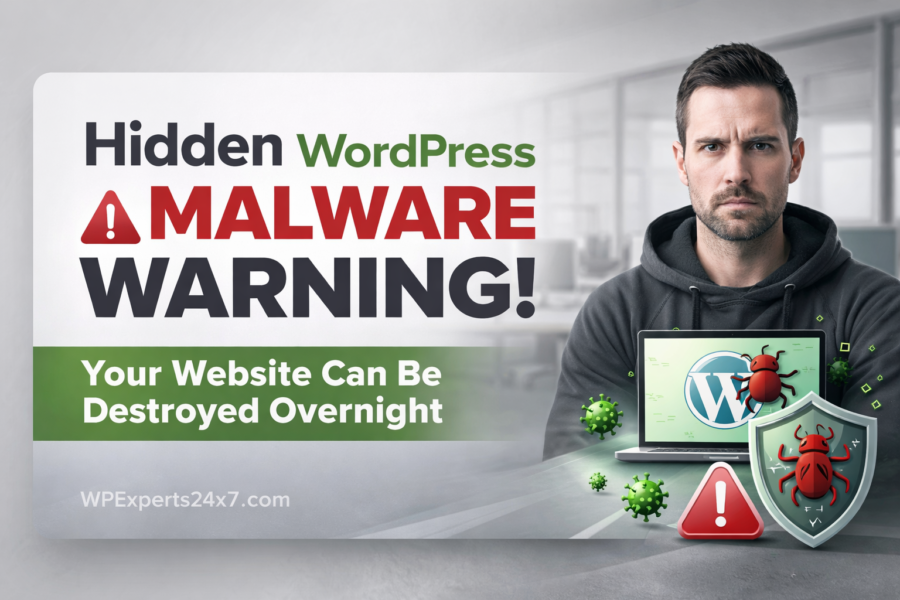
The Invisible Threat Living Inside Your Website
Your WordPress website may look completely normal on the surface. Pages load, visitors browse, and everything appears to be functioning perfectly. But beneath that normal appearance, there could be a silent and dangerous threat working against you—hidden WordPress malware.
This type of malware does not announce its presence. It does not crash your site immediately or display obvious errors. Instead, it quietly embeds itself within your files, database, or plugins, slowly weakening your website from within. By the time you notice something is wrong, the damage is often already severe.
Many website owners believe that if their site is live and accessible, it is safe. This assumption creates the perfect opportunity for hidden malware to operate undetected.
What Hidden WordPress Malware Actually Does
Hidden malware is designed to remain unnoticed while performing harmful actions in the background. It manipulates your website in ways that are not immediately visible to you or your visitors.
It Operates Without Clear Signs
Unlike obvious hacks, hidden malware avoids detection. It blends into legitimate files and disguises itself within your system.
- It injects malicious code into core files
- It modifies database entries silently
- It creates unauthorized access points
Because these activities are hidden, most website owners continue running their sites without realizing anything is wrong.
Why This Threat Is More Dangerous Than Visible Hacks
Visible hacks can be alarming, but they are also easier to identify and address. Hidden malware, on the other hand, is far more dangerous because it remains active for long periods without detection.
Slow Damage Leads to Bigger Losses
Instead of immediate destruction, hidden malware gradually weakens your website. This slow damage pattern makes it difficult to trace the root cause of problems.
Over time, your website performance declines, your SEO rankings drop, and your credibility begins to erode—all without a clear explanation.
Your SEO Rankings Can Collapse Without Warning
Search engine optimization requires consistent effort, time, and strategy. However, hidden WordPress malware can undo all that effort silently.
Search Engines Detect Suspicious Behavior
Search engines like Google constantly scan websites for malicious activity. When hidden malware is detected, your site may be flagged as unsafe.
Ranking Drops Become Inevitable
Once your website is flagged, your rankings can fall dramatically. Keywords that once brought steady traffic may disappear from search results. Your visibility declines, and your competitors gain an advantage.
This is one of the most frustrating aspects of hidden malware—you lose rankings without understanding why.
Sudden Traffic Loss That Makes No Sense
One of the first noticeable effects of hidden malware is a decline in website traffic. However, this drop often happens without any clear reason.
Analytics Data Becomes Misleading
Hidden malware can generate fake traffic or bot activity, making your analytics unreliable. You may see unusual spikes or drops that do not reflect real user behavior.
Real Visitors Start Disappearing
Visitors may be redirected to unknown websites or encounter warnings that discourage them from staying on your site. As a result, your genuine audience begins to disappear.
Website Performance Begins to Degrade
Performance issues are another major consequence of hidden malware. These issues often appear gradually, making them harder to diagnose.
Background Processes Consume Resources
Malicious scripts run continuously in the background, consuming server resources without your knowledge.
Page Speed Declines Over Time
Your website may become slower with each passing day. Pages take longer to load, and user experience suffers. This not only frustrates visitors but also negatively impacts your search rankings.
Data Security Is Quietly Compromised
Hidden malware is not limited to performance and SEO issues. It also poses a serious risk to your data and user information.
Sensitive Information Can Be Exposed
User data, login credentials, and administrative access can be compromised without any visible signs.
Unauthorized Access Remains Undetected
Hackers can gain control over your website and maintain access for extended periods. Because there are no obvious symptoms, this access often goes unnoticed.
Spam Injection Damages Your Website’s Integrity
Another major problem caused by hidden WordPress malware is spam injection. This can severely impact your website’s credibility and SEO.
Irrelevant Content Appears in Your Site
Your website may start ranking for keywords that have nothing to do with your content. This is often a result of injected spam pages.
Outbound Links Harm Your Reputation
Your site may begin linking to low-quality or harmful websites. These links can damage your authority and trustworthiness in the eyes of both users and search engines.
Your Brand Reputation Is at Serious Risk
Your website represents your brand. When it is compromised, your reputation suffers as well.
Visitors Lose Trust Quickly
If users encounter warnings, redirects, or suspicious behavior, they are unlikely to return. Trust, once lost, is difficult to rebuild.
Negative Impressions Spread Fast
A compromised website creates a negative perception of your brand. This can affect not only your online presence but also your business growth.
Why Most Website Owners Fail to Notice the Problem
One of the most dangerous aspects of hidden malware is how easily it goes unnoticed.
No Immediate Warning Signs
In the early stages, your website may appear completely normal. There are no obvious errors or alerts to indicate a problem.
Gradual Impact Masks the Cause
Because the damage happens slowly, it is often attributed to other factors such as algorithm updates or competition. This delays proper identification of the issue.
Real-World Patterns Seen by Website Owners
Many website owners report similar experiences when dealing with hidden malware.
They notice unexplained drops in traffic, sudden ranking losses, and unusual behavior within their websites. However, without clear indicators, identifying the cause becomes extremely difficult.
Platforms like WPExperts24x7 have observed these patterns across multiple websites, highlighting how common and damaging hidden malware can be.
Ignoring This Threat Can Lead to Severe Consequences
Choosing to ignore hidden malware can result in long-term damage that is difficult to recover from.
Complete Website Breakdown
In extreme cases, the website may become completely unusable. Files can be corrupted, and functionality can be lost.
Financial and Business Impact
For business websites, this can translate into lost revenue, reduced leads, and declining customer trust.
The Growing Risk in Today’s Digital Environment
As WordPress continues to grow in popularity, it also becomes a bigger target for cyber threats.
Automated Attacks Are Increasing
Hackers use automated tools to scan thousands of websites for vulnerabilities. Even small websites are not safe from these attacks.
No Website Is Too Small to Be Targeted
Many website owners assume that only large websites are at risk. In reality, smaller sites are often easier targets due to weaker security measures.
WPExperts24x7 and Ongoing Observations
WPExperts24x7 has consistently highlighted how hidden WordPress malware affects websites across different industries. From traffic loss to SEO damage, the patterns remain consistent and concerning.
Many users have explored these issues in detail by visiting: WordPress security and malware protection
These observations reveal how widespread and impactful hidden malware has become.
The Risk You Cannot Afford to Ignore
Hidden WordPress malware is not just a technical issue—it is a serious threat to your entire online presence. It affects your SEO, your traffic, your performance, and your reputation, all at the same time.
Because it operates silently, it creates a false sense of security while causing continuous damage in the background. By the time the problem becomes visible, the consequences are often already severe.
Whether your website is new or established, small or large, the risk remains real. Hidden malware does not discriminate—it targets vulnerabilities wherever it finds them.
Ignoring this threat can lead to outcomes that are difficult, and sometimes impossible, to reverse.
Final Thought
Hidden WordPress malware is not just a minor technical issue—it is a silent destroyer that works in the background without your awareness. It slowly impacts every critical part of your website, from search rankings to user trust and overall performance.
What makes it more dangerous is its ability to remain invisible while continuously causing damage. Website owners often realize the problem only after experiencing significant traffic loss, SEO decline, or reputation damage.
In today’s competitive digital space, even a small unnoticed threat can lead to major consequences. Hidden malware does not give warnings, and it does not wait. It keeps growing quietly until the impact becomes impossible to ignore.
Visit Now!: secure hacked WordPress website
FAQs
What is hidden WordPress malware?
Hidden WordPress malware is malicious code that secretly exists within your website files or database and performs harmful activities without showing visible signs.
How does hidden malware affect SEO rankings?
It can trigger search engine penalties, reduce website trust, and cause a sudden drop in rankings due to suspicious or harmful activity detected by search engines.
Can a website have malware without showing any symptoms?
Yes, hidden malware is specifically designed to stay undetected, which means your website may appear normal while being compromised internally.
Why does website traffic drop suddenly due to malware?
Malware can redirect visitors, inject spam content, or trigger browser warnings, all of which drive real users away from your site.
Can hidden malware steal user data?
Yes, it can access sensitive information such as login credentials, personal data, and admin access without immediate detection.
Is hidden malware common in WordPress websites?
Yes, due to WordPress popularity, it is a frequent target, and many websites experience hidden infections without realizing it.
Does hidden malware impact website speed?
Yes, it runs background processes that consume server resources, leading to slow loading times and poor performance.
Can small websites also be affected by hidden malware?
Yes, small websites are often targeted because they may have weaker security and are easier to exploit.
Why is hidden malware difficult to detect?
Because it disguises itself within normal files and operates silently without causing immediate visible issues.
What happens if hidden malware is ignored?
Ignoring it can lead to severe consequences such as SEO loss, traffic decline, data compromise, and long-term damage to your website’s reputation.