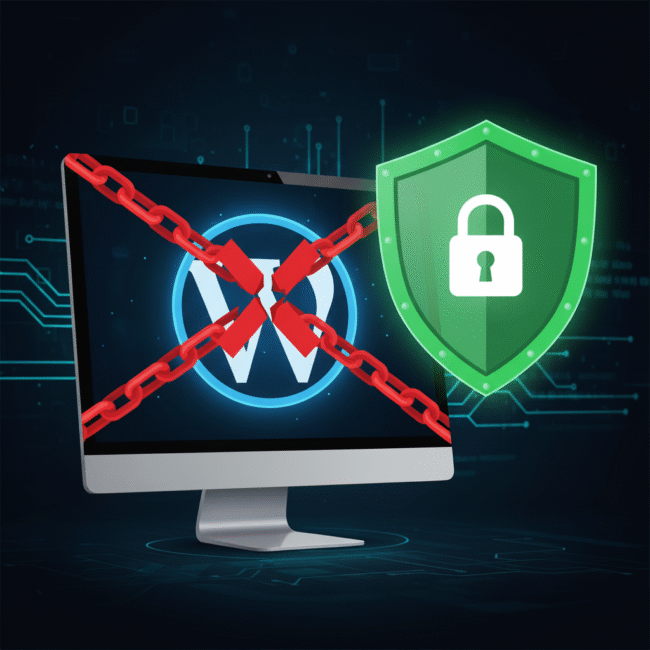
Congratulations—you’ve fought the good fight, and the malware is gone. The immediate crisis is over. But here’s the uncomfortable truth: simply removing the malicious code isn’t enough.
A WordPress hack is usually an exploitation of a vulnerability. If you don’t plug that hole, hackers often leave behind backdoors—small, hidden files that let them waltz right back in whenever they please.
A successful WordPress Malware Removal is only the first step. The second, and more crucial step, is the post-hack cleanup and security hardening. This guide outlines the five essential actions you must take immediately after a hack to ensure full recovery and prevent future attacks.
Step 1: The Critical Reset—Change Every Credential
Hackers likely gained access to more than just your core files. They might have logged your passwords, leaving your entire digital ecosystem exposed. A full credential reset is non-negotiable.
1.1: Database and Core WordPress Passwords.
The most sensitive area is your database.
- WordPress Admin: Force all Administrator and Editor users to set a new, strong password. Use a password manager to generate a unique 16+ character mix of symbols, numbers, and cases.
- Database (MySQL): Change the database password via your hosting control panel. Crucially, you must immediately update this new password in your site’s wp-config.php file. Failure to do this will crash your site, but ignoring it leaves a massive security gap.
1.2: Server and External Credentials.
Hosting Control Panel (cPanel/Plesk): Reset this password.
- FTP/SFTP Accounts: Reset these passwords. If you don’t use a specific FTP account often, delete it entirely.
- API Keys: If the hack involved compromised plugins (especially E-commerce or CRM connectors), regenerate any connected third-party API keys (e.g., Stripe, Mailchimp).
Step 2: Ruthless Backdoor Removal and File Integrity Check
The biggest mistake site owners make is assuming the scanner removed every malicious file. Hackers are clever; they often hide small PHP files (.php) in unsuspecting places.
2.1: Where Backdoors Hide
Backdoors are often disguised as legitimate files in these common locations:
- /wp-content/uploads/ (PHP files should never be here)
- /wp-includes/ (Check for recently modified files that don’t belong)
- /wp-content/themes/YOUR-THEME/functions.php (Look for obfuscated code at the very top or bottom)
2.2: The “Clean Core” Technique
For guaranteed cleanliness, replace all core WordPress files with a fresh, clean version:
- Backup your entire site one last time.
- Download a fresh copy of your WordPress version from WordPress.org.
- Delete the wp-includes and wp-admin folders from your server.
- Upload the fresh wp-includes and wp-admin folders.
Overwrite all files in the root directory (excluding wp-content and wp-config.php).
This ensures your core files are 100% clean.
Step 3: Implement Zero-Trust Principle for Users and Extensions
The attack vector was almost certainly an outdated plugin, an insecure theme, or a weak user account. Time to clean house.
3.1: Audit and Update All Extensions
- Update: Ensure all active themes and plugins are running their latest versions. Check the changelog for security patches.
- Remove: Delete any theme or plugin that you are not actively using. A disabled plugin is still a security risk if it has a vulnerable file structure.
- Source Check: If you used a nulled or pirated theme/plugin, delete it immediately. These often come pre-loaded with malware or backdoors.
H3 3.2: User Management and Cleanup
Go to your Users list in the WordPress Dashboard.
- Delete any unfamiliar or suspicious Administrator accounts.
- Demote non-development staff members from Administrator to Editor or Contributor. The fewer Admin users you have, the better your control over the site.
Step 4: Validate Your SEO Health with Google
Hackers frequently inject malicious content or spam links to leverage your site’s SEO value, causing Google to blacklist or de-index your pages.
4.1: Google Search Console Security Check
- Log into Google Search Console (GSC).
- Navigate to Security & Manual Actions. Check for “Security Issues.” If you see any, you must follow Google’s steps to fix them and submit a “Request a Review.”
- Check the Performance and Pages reports for any massive, inexplicable drops in traffic or the sudden indexing of pages with spammy URLs (e.g., pages named /buy-viagra-online-cheap/).
4.2: Clean Your .htaccess File
The .htaccess file is a powerful server configuration file that can be used by hackers to redirect your visitors to malicious sites.
- Open your .htaccess file (located in the root directory).
- Look for any unusual redirects, strange code blocks (especially at the top or bottom), or any code that doesn’t look like standard WordPress rewrite rules.
- If in doubt, back up the file and replace it with a fresh, default WordPress .htaccess file.
Step 5: Implement Proactive WordPress Security Hardening
The best defense is a strong offense. Now that your site is clean, you must put locks on all the doors.
5.1: Two-Factor Authentication (2FA)
This is the single most effective way to prevent brute-force attacks and credential theft. Install a 2FA plugin and make it mandatory for all administrative users. This means even if a hacker gets the password, they still need a code from a phone to log in.
5.2: Install a Robust WAF and Scanner
A Web Application Firewall (WAF) blocks known bad traffic before it even reaches your server.
- Use a service like Cloudflare (for DNS-level protection) or security plugins like Wordfence or Sucuri (for endpoint protection).
- Set up daily scheduled scans to monitor for any newly created or modified files.
5.3: Automated, Off-Site Backups
Ensure you have a reliable, automated backup solution that stores copies off-site (i.e., not on the same server). If you are ever hacked again, you can quickly restore from a clean, known-good version.
Conclusion: Beyond DIY—When to Call the Experts
Successfully navigating a WordPress Malware Removal and implementing comprehensive post-hack cleanup requires time, technical precision, and deep knowledge of server environments. If you miss just one hidden backdoor or vulnerability, the hackers will be back.
If you are struggling with a persistent hack, suspect hidden backdoors, or simply want the peace of mind that comes with professional security hardening, don’t hesitate. Our team specializes in emergency WordPress malware removal services, ensuring your site is not just clean, but secured against future threats.
Is your site safe, or just quiet? Let us ensure a full, permanent recovery.