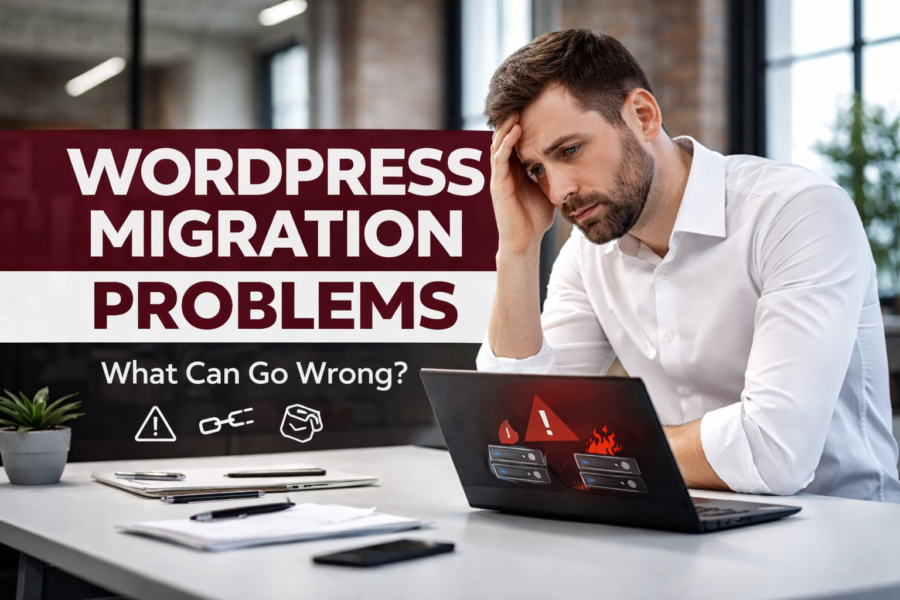
Website migration is often considered a simple technical process, but in reality, it is one of the most sensitive operations a website owner can perform. A WordPress migration involves transferring files, databases, configurations, and URLs from one environment to another. Even a minor mistake can trigger serious problems that affect performance, SEO rankings, user experience, and revenue. Many businesses attempt migration without understanding the risks involved, and this is one of the biggest reasons WordPress migration failures occur.
Businesses today depend heavily on their websites for lead generation, customer engagement, and online sales. When migration problems happen, the consequences can include lost traffic, broken pages, missing data, and even complete website downtime. These failures are not always visible immediately, which makes the situation even more dangerous. Some issues slowly damage a website’s credibility and performance over time.
Understanding the most common WordPress migration failures is essential for any business planning to move its website. Recognizing these problem scenarios early can help businesses avoid unexpected risks and ensure a smooth transition without damaging their online presence.
The Real Reasons Why WordPress Website Migrations Fail
WordPress migration failures rarely happen because of one single issue. In most cases, multiple small mistakes combine to create larger problems that disrupt the website’s functionality. Businesses often underestimate the complexity of migration, assuming it is just about copying files and changing hosting servers. However, migration involves database synchronization, DNS settings, SSL configuration, URL mapping, plugin compatibility, and server-level adjustments.
One of the biggest reasons migrations fail is the lack of planning. When a migration starts without proper preparation, the chances of technical errors increase significantly. Website owners may forget to check compatibility settings, ignore version conflicts, or skip testing procedures. These overlooked steps create a chain reaction of failures that can lead to serious downtime or data corruption.
Another major factor behind migration failure is time pressure. Businesses sometimes rush migration processes to meet deadlines or launch schedules. In these situations, critical verification steps are skipped, backups are incomplete, and testing environments are ignored. This rushed approach often results in unexpected failures that require emergency troubleshooting.
Many website owners discover these problems only after their visitors start reporting errors. By that time, traffic losses and user dissatisfaction may already be affecting business performance.
Critical Technical Problems That Cause WordPress Migration Failures
Technical failures represent one of the most common categories of migration issues. These problems are often invisible during the initial transfer process but become visible once the website goes live on the new server.
Database Connection Errors After Migration
Database connection errors are among the most frustrating problems businesses face after migration. WordPress relies heavily on database communication to display content, manage users, and load pages correctly. When database credentials or configuration files are mismatched, the website fails to establish a connection.
This type of failure typically results in error messages such as database connection failures or blank pages. Visitors encountering such issues may immediately leave the site, leading to reduced trust and engagement. For businesses that rely on online bookings or customer inquiries, database connection problems can directly impact revenue.
File Transfer Failures and Missing Data
File transfer issues occur when website files are not copied correctly during migration. Some files may be skipped due to permission restrictions, server limitations, or interrupted transfer processes. These missing files can cause broken themes, missing images, or incomplete functionality.
Hidden File Errors That Appear Later
Some file-related problems remain hidden until specific features are accessed. For example, a missing plugin file may not be detected immediately but could cause errors when users attempt to perform certain actions. These hidden failures create confusion and reduce confidence in website reliability.
DNS and Domain Configuration Problems
DNS configuration plays a crucial role in connecting domain names to the correct hosting environment. Incorrect DNS settings can cause visitors to be redirected to outdated versions of the website or display error messages.
Domain propagation delays also create uncertainty. During this period, some users may see the old website while others see the new one. This inconsistency affects brand credibility and creates confusion among customers.
SEO Problems That Frequently Occur During WordPress Migration
Search engine optimization plays a major role in website visibility, and migration failures often cause significant SEO disruptions. Businesses that depend on organic traffic may experience sudden ranking drops after migration.
Loss of Website Rankings After Migration
One of the most alarming problems businesses face is a sudden decline in search engine rankings. This usually happens when URL structures change without proper mapping or when redirects are not configured correctly.
Search engines rely on structured pathways to index website content. When these pathways are disrupted, indexing errors occur. Pages that previously ranked well may disappear from search results, reducing visibility and traffic.
Broken Links and Indexing Issues
Broken links are another common problem that affects SEO performance. During migration, internal links may point to outdated URLs or missing pages.
Common SEO-related problems include:
- Missing redirect mapping between old and new URLs
- Loss of metadata and SEO tags
- Duplicate content appearing across domains
- Improper sitemap submission
- Search engine crawl errors
These issues gradually weaken search engine performance, leading to long-term traffic decline.
Security and Data Risks That Increase Migration Failures
Security vulnerabilities represent another major cause of migration-related failures. Many businesses fail to evaluate security risks before starting the migration process.
Data Corruption During Migration
Data corruption occurs when database tables are not transferred accurately or become damaged during export and import operations. Corrupted data may result in missing pages, incorrect formatting, or unreadable content.
When data corruption affects customer records or transaction histories, businesses may face serious operational challenges. Recovering lost data can require extensive manual restoration, which consumes time and resources.
SSL Certificate Configuration Problems
SSL certificates protect user data and establish secure connections. During migration, SSL configuration errors can cause security warnings in browsers.
Visitors encountering security warnings may hesitate to continue browsing, especially when sensitive data entry is involved. This directly impacts trust and customer engagement.
Performance Issues That Appear After WordPress Migration
Website performance problems often emerge after migration due to server configuration differences or incomplete optimization.
Slow Website Loading Speeds
Performance degradation is one of the most frequently reported migration issues. A website that previously loaded quickly may suddenly become slow on a new server.
This slowdown affects user experience and increases bounce rates. Visitors expect fast-loading websites, and delays often lead them to abandon the page before completing desired actions.
Resource Limit Errors
Server resource limitations create unexpected performance failures. These issues occur when hosting environments do not support required memory or processing capabilities.
Typical performance-related challenges include:
- Insufficient server memory allocation
- Incompatible PHP versions
- Limited bandwidth resources
- Improper caching configuration
- High CPU usage due to plugin conflicts
These performance challenges reduce website reliability and create negative impressions among users.
User Experience Problems That Affect Customer Trust
Migration failures not only impact technical performance but also damage user experience. Visitors encountering errors may lose confidence in the website’s reliability.
Visit more info: Business-Safe Website Migration Services
Website Downtime and Accessibility Issues
Downtime represents one of the most serious consequences of migration failure. When websites remain unavailable, visitors cannot access content or complete transactions.
This issue is particularly harmful for businesses that rely on continuous online operations. Even short downtime periods can disrupt marketing campaigns and reduce customer satisfaction.
Missing Media and Visual Elements
Images, videos, and visual assets play a vital role in website presentation. Migration failures sometimes cause media files to disappear or display incorrectly.
Visual Content Errors That Reduce Engagement
Missing visuals reduce user engagement and create an incomplete browsing experience. Visitors expect consistent presentation, and broken media elements create frustration.
Warning Signs That Indicate a WordPress Migration Failure
Identifying early warning signs is essential for preventing larger problems. Many migration failures show symptoms before becoming critical.
Key warning signs businesses often experience include:
- Unexpected website errors appearing after launch
- Sudden traffic drops in analytics reports
- Increased bounce rates from visitors
- Frequent login failures or admin access problems
- Inconsistent page loading behavior
Recognizing these signals early allows website owners to address underlying problems before they escalate into full-scale failures.
The Business Impact of WordPress Migration Failures
Migration failures affect more than technical systems—they influence business reputation, revenue flow, and customer confidence.
When visitors encounter broken pages or security warnings, they often assume the business lacks professionalism. This perception damages brand credibility and reduces customer trust. Businesses may also experience financial losses due to interrupted sales processes and delayed service delivery.
Long-term effects of migration failures include reduced organic visibility, lower customer engagement, and increased maintenance costs. These outcomes highlight the importance of careful planning and professional oversight during migration projects.
Many businesses eventually realize that attempting migration without expert support can lead to unexpected complications. When complex problems arise, seeking professional assistance becomes necessary to restore stability and performance.
If any of these issues are currently affecting your website, visiting a trusted professional WordPress migration service can help identify the root cause and prevent further disruptions. Businesses facing persistent migration problems often benefit from expert evaluation and structured recovery processes.
Why Businesses Choose Professional WordPress Migration Support
Businesses today understand that migration is not just a technical transfer but a strategic operation that requires careful monitoring. Professional migration support helps ensure stability, security, and consistent performance throughout the transition.
Professional service providers analyze website architecture, test migration environments, verify compatibility, and monitor performance after deployment. This structured approach significantly reduces the risk of unexpected failures and ensures that websites remain fully functional during the migration process.
Organizations that rely on consistent website performance often choose professional migration assistance to safeguard their online presence. By addressing complex technical challenges and minimizing risks, professional services help businesses maintain operational continuity and protect their digital assets.
Final Thought
WordPress migration failures are more common than many businesses expect, and the risks involved are often underestimated until serious problems begin to appear. From unexpected downtime and missing data to sudden SEO losses and broken website functionality, these issues can disrupt business operations and damage customer trust. What makes these failures even more dangerous is that many problems remain hidden during the early stages and only surface when visitors start experiencing errors.
Ignoring early warning signs or attempting migration without proper expertise can turn a routine website move into a costly setback. Businesses that rely on their website for leads, sales, and customer engagement cannot afford prolonged downtime or technical instability. Every broken page, slow loading issue, or configuration error reduces user confidence and directly impacts long-term online growth.
If your website is already showing signs of WordPress Migration Failures, or if you are planning to migrate your site and want to avoid these common risks, it is important to act before small issues grow into major disruptions. Professional evaluation and monitoring can make the difference between a smooth transition and a failed migration that affects your business performance.
To ensure your website remains secure, stable, and fully functional, consider visiting WPEXPERTS24x7 for professional migration support and expert technical assessment. Taking the right step at the right time can protect your website from unexpected failures and help maintain your business reputation in an increasingly competitive digital environment.
Visit Now!: Advanced WordPress Migration Professionals