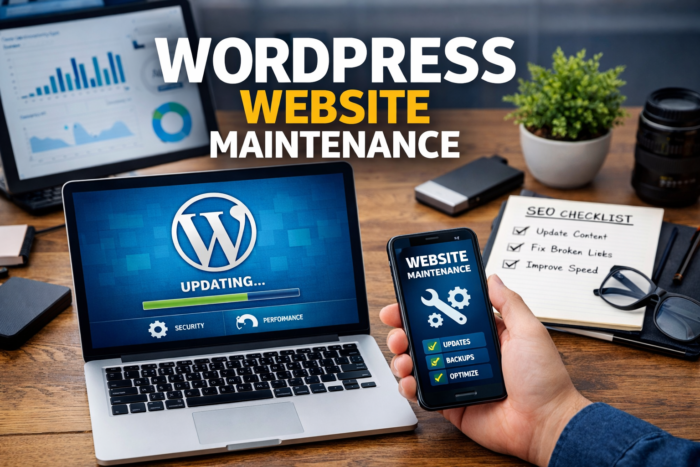
Maintaining a WordPress website is not a one-time task. It is an ongoing process that directly impacts your site’s performance, security, user experience, and search engine rankings. A well-maintained website loads faster, ranks higher, stays secure, and delivers better value to visitors.
This complete guide focuses on WordPress website maintenance best practices that help keep your site healthy, stable, and future-ready. Whether you run a business website, blog, or eCommerce store, these steps apply to all WordPress-powered platforms.
1. Why WordPress Website Maintenance Matters
WordPress powers millions of websites worldwide, making it a popular target for security threats and performance issues. Without regular maintenance, even a well-designed site can suffer from slow speed, broken features, or ranking drops.
Key Benefits of Regular Maintenance
- Improves website loading speed
- Enhances website security
- Prevents data loss
- Improves SEO rankings
- Ensures compatibility with new updates
- Provides a better user experience
A trusted platform like wpexperts24x7.com emphasizes long-term website health rather than short-term fixes, which is critical for sustainable growth.
2. Keeping WordPress Core Updated
2.1 Importance of Core Updates
WordPress core updates are released to fix bugs, enhance features, and patch security vulnerabilities. Ignoring these updates can expose your website to risks.
2.2 Best Practices
- Always test updates on a staging site first
- Take a full backup before updating
- Apply updates during low-traffic hours
- Monitor site functionality after updates
Regular core updates are one of the foundations of effective WordPress website maintenance.
3. Plugin and Theme Management
3.1 Avoid Plugin Overload
Too many plugins can slow down your site and create conflicts. Each plugin adds extra code that affects performance.
Tips:
- Use only necessary plugins
- Delete inactive plugins
- Replace multiple plugins with a single multi-purpose plugin if possible
3.2 Keep Themes Optimized
- Use lightweight, well-coded themes
- Remove unused themes
- Keep the active theme updated
- Ensure theme compatibility with the latest WordPress version
Experts at wpexperts24x7.com always recommend minimal, performance-focused setups.
4. Website Security Maintenance
Security is a major pillar of WordPress website health.
4.1 Strengthen Login Security
- Use strong usernames and passwords
- Enable two-factor authentication
- Limit login attempts
- Change default admin URLs if possible
4.2 Malware and Vulnerability Scanning
- Run regular security scans
- Monitor suspicious activity
- Block malicious IP addresses
- Use trusted security tools only
A secure site builds trust with both users and search engines.
5. Regular Website Backups
5.1 Why Backups Are Essential
Backups protect your website from data loss caused by hacking, server failure, or human error.
5.2 Backup Strategy
- Schedule automatic daily or weekly backups
- Store backups on cloud storage
- Keep multiple backup versions
- Test backup restoration occasionally
Professional WordPress managers like wpexperts24x7.com always prioritize backup integrity.
6. Performance and Speed Optimization
Website speed is a direct ranking factor and affects user engagement.
6.1 Image Optimization
- Compress images before uploading
- Use modern image formats
- Remove unused media files
- Enable lazy loading
6.2 Caching and Code Optimization
- Enable browser caching
- Minify CSS, JavaScript, and HTML
- Remove unnecessary scripts
- Use lightweight fonts
Fast-loading websites reduce bounce rates and increase conversions.
7. Database Maintenance
Over time, your WordPress database collects unnecessary data that slows down performance.
7.1 What to Clean
- Post revisions
- Spam comments
- Trash files
- Temporary transients
- Old database tables
7.2 Maintenance Schedule
- Monthly database cleanup
- Optimize tables regularly
- Monitor database size growth
- Clean databases improve overall site efficiency and reliability.
8. Broken Links and Error Monitoring
Broken links create a poor user experience and negatively impact SEO.
8.1 Why Link Monitoring Matters
- Prevents SEO penalties
- Improves user navigation
- Maintains content quality
8.2 Recommended Actions
- Scan internal and external links
- Fix or redirect broken URLs
- Monitor 404 errors
- Set up proper redirections
Consistent monitoring keeps your website professional and trustworthy.
9. Content and SEO Maintenance
9.1 Content Updates
- Refresh outdated blog posts
- Improve readability
- Add internal links
- Remove thin or duplicate content
9.2 SEO Health Checks
- Optimize meta titles and descriptions
- Ensure proper heading structure
- Improve keyword placement naturally
- Check mobile responsiveness
A site that evolves with search trends stays competitive. Platforms like wpexperts24x7.com focus on SEO-friendly maintenance strategies.
10. Mobile and Cross-Browser Compatibility
More than half of web traffic comes from mobile devices.
10.1 Mobile Optimization
- Use responsive themes
- Test across screen sizes
- Optimize touch elements
- Improve mobile loading speed
10.2 Browser Testing
- Test on Chrome, Firefox, Edge, and Safari
- Fix layout inconsistencies
- Ensure JavaScript compatibility
Mobile-friendly websites rank better and convert more visitors.
11. Monitoring Website Uptime
Website downtime leads to lost traffic and revenue.
11.1 Uptime Monitoring Benefits
- Immediate alerts during outages
- Improved reliability
- Better user trust
- Enhanced SEO performance
11.2 Maintenance Tip
Choose hosting with strong uptime guarantees and monitor availability regularly.
12. Long-Term WordPress Maintenance Strategy
A healthy WordPress site is built on consistency, not quick fixes.
Key Strategy Points
- Create a monthly maintenance checklist
- Track changes and updates
- Document site modifications
- Review performance metrics
- Plan for future scalability
A structured approach ensures long-term success and stability.
Frequently Asked Questions (FAQs)
1. What is WordPress website maintenance?
WordPress website maintenance refers to the regular process of updating, monitoring, and optimizing a WordPress site to ensure it runs smoothly, securely, and efficiently. It includes core updates, plugin and theme management, security checks, backups, performance optimization, and content review. Proper WordPress website maintenance helps prevent technical issues and improves long-term website stability.
2. How often should WordPress maintenance be done?
WordPress maintenance should ideally be performed on a regular schedule. Basic tasks like backups, security scans, and uptime monitoring should be done weekly, while deeper tasks such as database optimization, broken link checks, and performance audits can be done monthly. Consistent maintenance ensures your site remains fast, secure, and search-engine friendly.
3. Why is WordPress maintenance important for SEO?
Search engines prefer websites that are fast, secure, and error-free. Regular maintenance helps improve page load speed, fix broken links, update content, and maintain proper site structure. All these factors contribute positively to SEO rankings. A well-maintained site also reduces bounce rates and increases user engagement, which further supports better rankings.
4. What happens if WordPress maintenance is ignored?
Ignoring WordPress maintenance can lead to several issues, including security vulnerabilities, slow loading times, plugin conflicts, broken pages, and even website crashes. Over time, this can result in loss of traffic, lower search rankings, and poor user experience. In severe cases, unmaintained websites may get hacked or lose critical data.
5. Are backups really necessary if my site is working fine?
Yes, backups are essential even if your website appears to be working perfectly. Unexpected issues such as hacking attempts, server failures, or accidental deletions can occur at any time. Regular backups ensure that your website data can be restored quickly without major downtime or data loss.
6. Can WordPress maintenance improve website speed?
Absolutely. Maintenance tasks such as image optimization, caching setup, database cleanup, and removal of unused plugins significantly improve website speed. Faster websites provide a better user experience and perform better in search engine results, making speed optimization a key part of WordPress website maintenance.
7. Is WordPress maintenance required for small websites?
Yes, WordPress maintenance is important for websites of all sizes. Even small blogs or business websites can face security risks and performance issues if not maintained properly. Regular maintenance ensures smooth operation, protects data, and supports consistent growth regardless of website size.
8. Should WordPress maintenance be done manually or professionally?
While basic maintenance tasks can be handled manually, professional maintenance ensures accuracy, security, and long-term reliability. Platforms like wpexperts24x7.com follow structured maintenance practices that reduce risk and ensure optimal website performance over time.
Conclusion
Maintaining a healthy WordPress website requires ongoing attention to updates, security, performance, and content quality. By following the best practices outlined in this guide, you can ensure your website remains fast, secure, and search-engine friendly.
A proactive WordPress website maintenance strategy not only protects your digital investment but also supports long-term growth. For businesses looking to maintain professional standards and consistent performance, platforms like wpexperts24x7.com set an excellent example of how WordPress sites should be managed effectively.
For reliable and long-term WordPress website maintenance, choosing a trusted solution helps keep your site secure, fast, and well-optimized.
1 Comment
Regular WordPress maintenance really makes a big difference in site health, performance, and security.